Having sex as a teenager can be a new and exciting experience. It is vital therefore, that we learn to make informed decisions about sex; understanding the consequences of those decisions and ensuring that we always practice safe sex.
Why do people have sex?
There are two main reasons people have sex.
- Sex for pleasure; during sex our brain releases happy chemicals, or endorphins.
- Sex as reprduction; our brain also releases happy chemicals, or endorphins when the intention is to get pregnant and have a baby.
Teenage pregnancy affects girls’ education, employment, and social status. Having a child is a complex process. The body must be ready to reproduce, and this is why a minimum of 20 years is a suitable timeframe. Also, the decision to become pregnant should be discussed between partners, with due consideration given to the parents’ socioeconomic status. i.e. having a child means we have to have the necessary resources to look after and bring up the child.
Which organs matter most for sexual pleasure and reproduction?
The main organ involved in sexual pleasure and reproduction is our brain. The brain controls moods, emotions, and the release of hormones that affect sexual and reproductive functions.
Sexual and reproductive health specialists perceive the brain to be the largest and most powerful sex organ in our body.
For example, with boys, sexual desire is first felt in the brain. The brain then sends a message to the heart which increases the blood flow to the penis making it erect.
Similarly, when sexual desire occurs with girls, an increased blood flow is directed to the vulva which swells the labia in preperation for sex.
If sexual desire progresses to sexual intercourse with boys, semen may be released from a boy’s penis – a male orgasm. It is a white or light yellow fluid containing millions of sperm. If this fluid enters the vagina it can cause pregnancy.
If sexual desire progresses to sexual intercourse with girls, they may experience a state of sexual pleasure resulting in an orgasm. Some may also experience an increased flow of vaginal fluid.
Sex is not just about the penis and vagina. Non-penetrative sex, such as kissing, hugging, touching and cuddling, may also be practiced.
There is no specific rule as to how sex should take place. It is up to the individual to decide what they like and how they like it, and to communicate this to their partner.
Young people may be tempted to imitate sex scenes depicted in pornographic films. Remember, pornography generally features actors who perform in front of the camnera. This is not sex. This is porn. It is important for teenagers to understand this distinction and not force sexual partners to perform sex acts depicted in porn.
Sex for pleasure is based on the fundamentals of consent. Where both partners agree. If one partner is forced to perform a sex act against their will, there is no pleasure, only discomfort and fear, which does not allow for the release of happy chemicals/endorphines.
Some negative consequences that may occur when teenagers have sex
- Sexually Transmitted Infections [STIs].
- Unwanted pregnancies.
- Stress caused by guilt; especially relating to prescribed family and cultural values.
- Blackmail, extortion and exploitation resulting from the filming of sex.
The most effective way to avoid these negative consequences is to refrain from having sex.
While a sexual experience may be a natural part of development as a teenager, it would be wise to wait until you meet a partner that understands the potential for negative consequences and works with you to address these concerns.
Curiosity, peer pressure, thinking that it is the right thing to do in a romantic relationship, are all considerations that should be dicussed with a partner who you can trust, who is willing to think through to the potential consequences of sex, and someone who agrees to practice safe sex.
Things to consider before having sex
1. Does your partner want to use a condom?
When one partner talks about using a condom, the other may refuse and make it a matter of trust. Using a condom provides protection for both partners and is not a sign of infidelity. Condoms don’t just prevent a pregnancy, they also prevent the transmission of STIs. As a teenager never agree to have sex without a condom. Remember, sex for pleasure works only when both partners feel safe.
2. Do I want to have sex? Is someone forcing me to do it?
Think about whether you are having sex to please someone else. You may have decided to have sex due to peer pressure – everybody claims to have had sex except you. Perhaps someone is forcing you to have sex by threatening to leak a nude photo or video of you. Remember, sex is about pleasure. Being forced to have sex means that there is an absence of pleasure. This is not sex. This is rape. Our country has numerous laws in place to protect us from sexual coercion. Reach out to a trusted adult for support.
Sex is pleasurable only if you give consent, and there is an absence of fear. Consent can only be given when you are sure you are ready.
Read more here – Let’s Respect consent
3. Is it okay for someone to film me having sex?
Today, given the rapid advances with technology, this is a question that everyone who has sex should consider. In addition to being informed about the intention to film sex by your partner, hidden cameras may be installed in bathrooms, hotel rooms, and even in homes.
Even if you do give consent to be filmed, remember that sex videos are a burgeoning online business, and in the event of carelessness by you or your partner, or the intent to hurt at the end of relationship, these photos and videos can make it online and cause harm to either you and your partner.
No matter how much you trust your partner, we recommend that you do not give consent to be filmed or photgraphed. If they are forcing you, reach out to a trusted adult for support.
Read more here – What can I do if someone is threatening to post my private photos (nudes) publicly?
Preventing an Unwanted Pregnancy
Preventing pregnancy is known as contraception. There are various methods and it is important to know these regadless of whether you are sexually active or not.
The best way to prevent a teenage pregnancy is to abstain from sex.
Below is information about some of the modern birth control methods available in Sri Lanka.
- Condom (latex-rubber sheath)

The latex-rubber sheath used to cover the erect penis is called a condom.
A new condom should be used every time you have sex.
Since the condom acts as a cover, it prevents sperm from entering the vagina.
A condom provides protection against unwanted pregnancy as well as protection against sexually transmitted infections. This is referred to as Dual Protection.
There are generally three condoms in one pack of condoms, and a new condom should be put on correctly each time before you engage in penetrative sex.
If you have a teenage friend who is having sex, educate them about the benefits of using a condom. How to put on a condom correctly is indicated on the condom pack, or in an accompanying leaflet.
- Contraceptive Pills
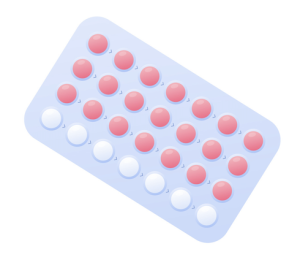
The contraceptive pill is a hormonal birth control method that prevents pregnancy. It is a safe, affordable and effective method if you take it every day.
A pack of pills contains 28 pills. The first 21 pills (light-colored pills) contain hormones (estrogen and progestin). The remaining 7 pills (brown-colored pills) contain iron.
When taken daily, the pill prevents the development and release of an egg and thickens cervical mucus, preventing sperm from reaching the uterus.
- The Depilatory (DMPA) Injection
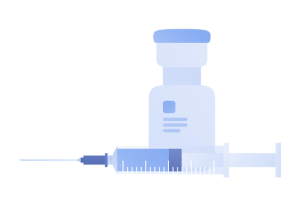
This injection prevents the development and release of an egg and thickens cervical mucus, preventing sperm from reaching the uterus.
The best time for a woman to get this injection is within the first 7 days of her period. This injection can also be given as a contraceptive six weeks after a woman gives birth.
This injection should be administered every 90 days.
- Hormonal Implants
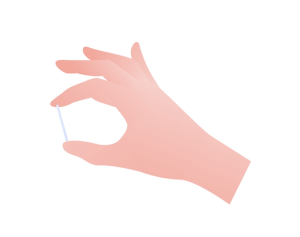
Hormonal Implants are thin, long-acting capsules containing the hormone progestin.
This prevents the development and release of eggs and thickens cervical mucus to block sperm from entering the uterus.
The Hormonal Implants currently used in Sri Lanka can prevent pregnancy for up to 3 to 5 years.
This is inserted under the skin of a woman’s upper arm through a small incision by a trained doctor.
The Hormonal Implants should be removed at the end of the period. If necessary, the Hormonal Implants can be inserted again. Hormone implants can be used repeatedly without any fear of causing infertility.
If you have a teenage friend who lives with a partner, encourage her to explore this option with a government mid-wife and the nearest Medical Officer of Health [MOH] Office.
- Intrauterine Device (IUD) / Copper T-IUD
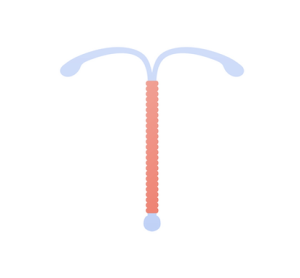
This is a small, flexible implant made of copper and plastic that is safe for the body.
It can prevent unwanted pregnancies for up to 10 years.
In the meantime, if a child is desired, it can be easily removed and fertility can be restored at any time. The IUD should be removed at the end of 10 years and a new implant should be inserted the same day if further prevention of pregnancy is desired.
The IUD mainly prevents fertilization of the egg and, if fertilization does occur, prevents the fertilized egg from implanting in the uterus.
The IUD is placed in the uterus by a trained doctor or nurse, and is available both from government and private healthcare providers.
While this method is a long-term contraceptive, it can also be used as a short-term method for those who need it.
Emergency Contraceptive Methods
Emergency Contraceptive Methods are used most commonly in the following instances:
- Preventing pregnancy in the event of sexual assault.
- After unprotected sex.
- When a condom is worn incorrectly or breaks.
There are three methods of emergency contraception that can be used. These methods are different from regular methods of contraception detailed above.
1.Emergency Contraceptive Pills – ECP [Morning After Pill]
These pills can be purchased from pharmacies in packs of one or two pills. The instructions for use are included, and the pill is most effective when taken as soon as possible after the incident of unprotected sex. After 5 days these pills are no longer effective.
Remember, this is not a method that can be used every day. Data shows that the regular use of ECPs [e.g. weekly use] reduce how effective these pills are at preventing pregnancy.
2. Intrauterine Device (IUD)
An intrauterine device (IUD) can also be inserted within five days of having unprotected sex to prevent pregnancy. The IUD must be inserted by a trained doctor or nurse, and is available both from government and private healthcare providers.
3. Regular Contraceptive Pills
In the unlikely event you cannot find Emergency Contraceptive Pills to prevent pregnancy after unprotected sex, taking 4 regular contraceptive pills as soon as possible [within 72 hours] followed by another 4 pills 12 hours later can be effective.
How to prevent a sexually transmitted infection?
Unprotected sex is unsafe, and in addition to causing an unwanted pregnancy it can lead to a sexually transmitted infection. i.e. an infection that is spread from an infected person to another person during unprotected sex.
The best way to prevent sexually transmitted infections is to use a condom correctly every time you have sex.
According to data from the Ministry of Health, sexually transmitted infections, including HIV, have increased among adolescents and young people in Sri Lanka. It is vital, therefore, that young people are aware of the different kinds of sexually transmitted infections and their prevention.
Sexually transmitted infections can be divided into 4 groups.
Bacterial Infections – Chlamydia, Syphilis, Gonorrhea
If detected early, bacterial infections can be treated effectively by government and private healthcare providers..
Viral Infections – Herpes, Genital Warts, HIV
There is no treatment to completely cure viral infections. If detected early, however, these infections can be controlled and people can live a normal life, as seen with the advancements in the treatment of HIV.
Read more here –
Fungal Infections – Candidiasis
Infections caused by fungi can be completely cured with effective treatment available from government and private healthcare providers.
Parasitic Infections – Scabies, Trichomoniasis
Similarly, today infections caused by parasites can be completely cured with treatment available from government and private healthcare providers.
Sexually transmitted infections generally take time to produce visible symptoms. Often, there are no symptoms at all. It is important therefore to get tested after an incident of unprotected sex. If detected early, we have the opportunity to begin treatment and recover fully, or control the viral infection.